Subterranean termites: the integrated 3-level intervention plan
Reticulitermes lucifugus is the Mediterranean subterranean termite, cryptic and silent: it advances inside the wood without ever emerging to light, moving through soil galleries cemented with saliva. The Hygiene Care plan acts simultaneously on the three nodes of the system: external focus (stumps, dead logs), perimeter barrier of the building and internal structural damage. Only integrated action achieves definitive eradication.

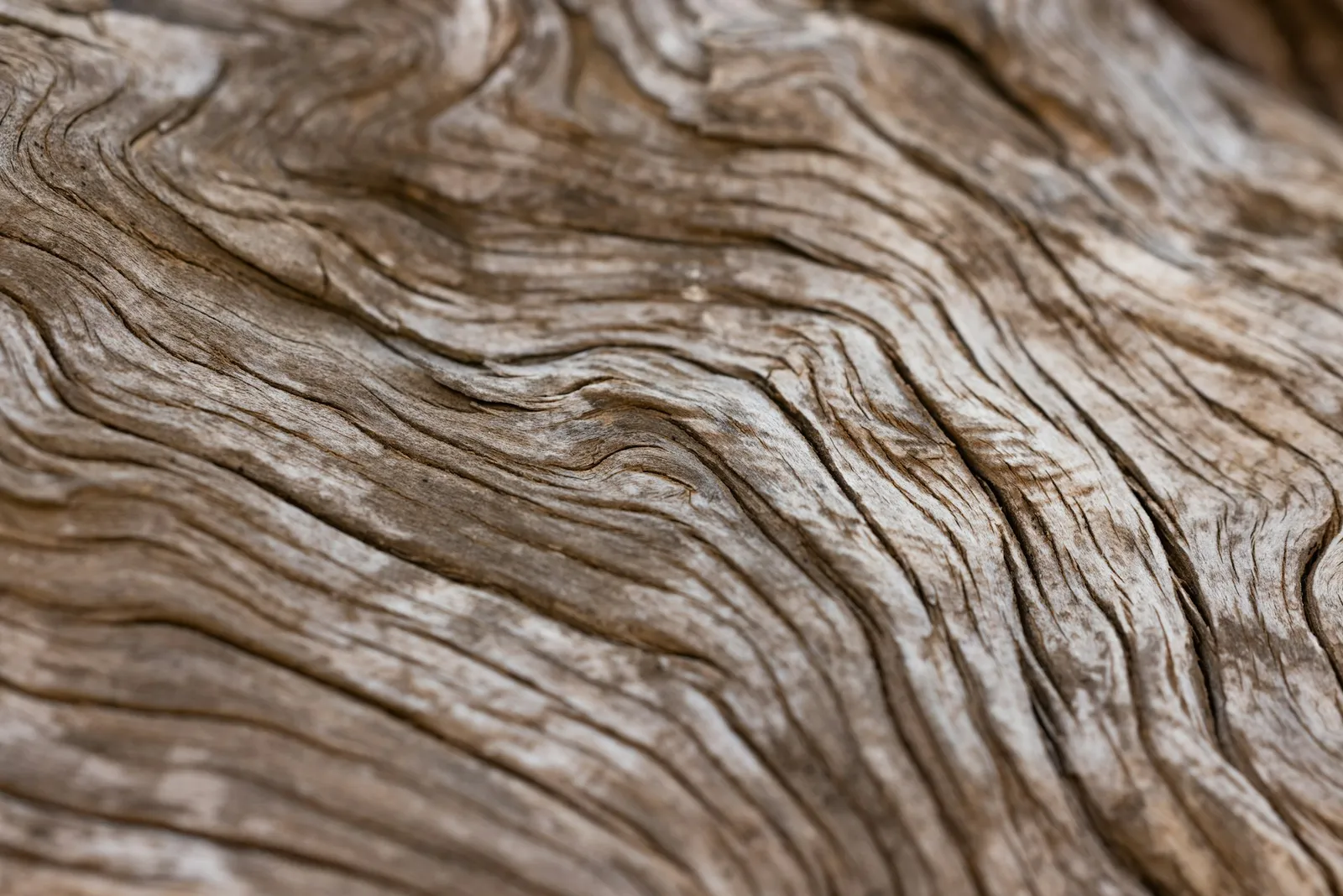
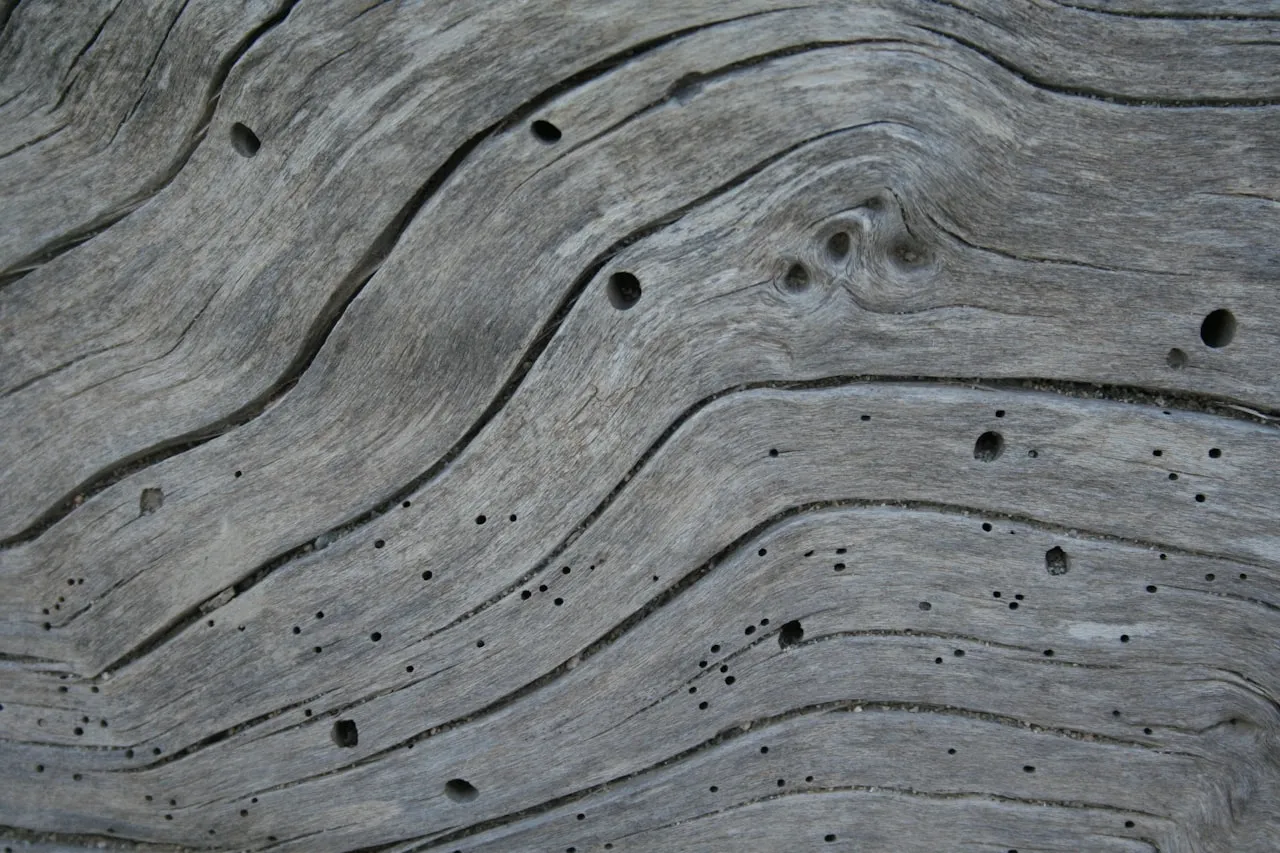
"Galleries dug by Reticulitermes lucifugus advance from inside the wood outwards: the surface looks intact while the interior is completely hollowed out and 'papery'."
Reticulitermes lucifugus biology
Species: *Reticulitermes lucifugus* (Rossi, 1792) — the most widespread subterranean termite in Italy. Order Isoptera, social castes.
Caste organisation:
• King and queen: live in the underground primary nest. A queen can produce hundreds of thousands of eggs over 20 years.
• Workers: 80% of colony, dig galleries and feed on cellulose. Blind, depigmented.
• Soldiers: 10-15%, developed mandibles for nest defence.
• Nymphs: developing juveniles, plastic caste.
• Alates: reproductives swarming in spring (March-May) to found new colonies — their appearance in the house is the first visible sign.
Cryptic behaviour: *R. lucifugus* never emerges to light. It moves inside saliva-cemented soil galleries connecting the underground nest to surface cellulose sources. Damage advances from inside the wood outwards: the surface looks intact while the interior is completely hollowed out.
Damage speed: slow but inexorable — a consolidated colony can compromise a load-bearing beam in 2-5 years. Non-inspectable areas (closed attics, cavities, wall supports) are most at risk.
Regulatory references and products
Regulatory framework:
• D.Lgs. 150/2012 (sustainable pesticide use).
• EU Reg. 528/2012 — Biocides (BPR).
• Italian PMC (Medical-Surgical Aids) registered products.
• EC Reg. 1907/2006 (REACH) — SDS.
• D.Lgs. 81/2008 — operator safety.
• EU Reg. 2016/425 — Cat. III PPE.
Products and actives:
• Microencapsulated fipronil (phenyl-pyrazole): non-repellent, transferred by trophallaxis, domino effect on the whole colony including queen.
• Microencapsulated imidacloprid (neonicotinoid): non-repellent, soil residuality 6-12 months.
• Bifenthrin / Permethrin (pyrethroids).
• Diflubenzuron / Noviflumuron (IGR — Insect Growth Regulators).
Why non-repellent technology matters: a repellent product creates a barrier that termites bypass. Non-repellent products (fipronil, imidacloprid) are not detected by termites: they cross them, carry them to the nest by trophallaxis and diffuse them through the whole colony, including reproductive castes.
Microencapsulated tech: polymer microcapsules trap the active and release it in a controlled way — low volatility, long residuality (6-12 months), lower operator/inhabitant exposure.
3-level strategy and schedule
🌳 LEVEL A — External focus remediation (stumps, dead logs in the park or garden):
• Generous spraying with microencapsulated insecticide.
• Direct injection into the stump at 15-20 cm intervals.
• Treatment of surrounding soil (80-100 cm radius).
• If possible: full mechanical stump + root removal.
• If not possible: repeat treatment at 6 months.
🏠 LEVEL B — Perimeter chemical barrier:
• Perimeter trench (10-15 cm depth × 15-20 cm width) continuous around the structure.
• Generous spraying with non-repellent fipronil or imidacloprid.
• Treated-zone width: 30-50 cm from wall.
• Direct injections into perimeter termite mounds.
• Localised injections at corners, foundations, pipe entries.
🏚️ LEVEL C — Internal structural treatment (attic, beams):
• Cavity injection between attic floor and roof.
• Beam injection holes (Ø 8-10 mm, depth 5-8 cm, 45° angle). Sealed with wood plug or filler.
• Surface treatment of all exposed beams.
• Priority focus on critical structural nodes: beam heads embedded in masonry, supports, purlins, moisture areas.
• IGR cellulose-bait monitoring stations.
📅 Schedule:
• T0: integrated A+B+C intervention in 1-2 working days.
• T0 + 4 weeks: phone verification with client.
• T0 + 6 months: verification survey, station inspection, reinforcement if needed, release of intervention certificate.
Expected outcome: foraging stop 24-72 h · colony collapse 4-8 weeks (domino) · visible activity gone 2-3 months · certified eradication at 6 months · annual monitoring afterwards.
Safety, warranty and client recommendations
Operator PPE (EU Reg. 2016/425, cat. III):
• Tyvek suit type 5/6 · A2P3 mask · nitrile gloves · anti-splash goggles · footwear.
Resident instructions:
• Pre-intervention: clear attic, cover food, animals out for the day.
• Internal post: ventilate 2-4 h, re-entry after 4-6 h (kids 6 h, animals 24 h).
• External post (barrier): no irrigation 24-48 h, no digging in perimeter for 30 days.
Contractual warranty:
• Free verification survey at 6 months.
• If residual activity: reinforcement at no extra cost within contract limits.
• Stamped and signed intervention certificate.
• Limitations: re-infestation from unrelated colonies, pre-existing damage, lack of access to third-party external foci.
🚨 Priority recommendations:
1. Perimeter moisture control: dry perimeter, efficient gutters.
2. No wood-soil contact: never stack firewood against walls.
3. Remove or treat stumps and dead wood on property.
4. Report alate swarms in spring (dark winged insects, 7-10 mm).
5. Report new soil galleries.
6. Don't break the chemical barrier: 12 months, avoid digging within 50 cm of wall.
7. Annual monitoring recommended.
🛑 Alarm signals — call Hygiene Care immediately:
spring alates · new soil galleries · wood sounding hollow · frass piles · new beam cracks.
Want to be compliant without worries?
Free site visit, transparent quote within 48 working hours, ongoing support with digital deadline tracker.
● Consultation request
Let's talk.
Fill in the form: a technician will get back to you within 24 working hours with an initial assessment and an indicative quote.
Via degli Artigiani 27
Via degli Artigiani 27 — 50055 Lastra a Signa (FI), Italy